An interactive simulator for the six classic disk scheduling algorithms. Enter a request queue and watch the read/write head service it step by step — on an animated platter, with the seek path plotted live and full playback controls.
Everything runs client-side. No install, no account — open it and start exploring.
A live SVG disk with concentric tracks and colour-coded request markers. The head arm swings to each cylinder, exactly in sync with the seek graph.
Play, pause, step forward and back, reset, and a speed slider from 100 ms to 2 s per move. Keyboard shortcuts included for smooth demos.
The running total seek time updates as the head moves, with a full per-move breakdown — so the cost of each decision is always visible.
Run all six algorithms on the same request queue and compare their total seek time in a single chart. The optimal choice is highlighted for you.
Concept explainers plus a hands-on tool. Perfect for OS coursework, exam prep, or teaching the elevator algorithm intuitively.
Pure HTML, CSS and JavaScript. Nothing to build, nothing to serve — just open the page in any modern browser.
A process needs both CPU time and I/O time. For I/O, it asks the operating system to access the disk. Many requests can arrive at once, but the disk controller can serve only one at a time — so the rest wait in a queue.
Disk scheduling is the technique the OS uses to decide the order in which these pending requests are served. Because the read/write head is mechanical and slow, choosing a good order dramatically reduces the total arm movement — and that is what these algorithms optimise.
Try it in the simulator
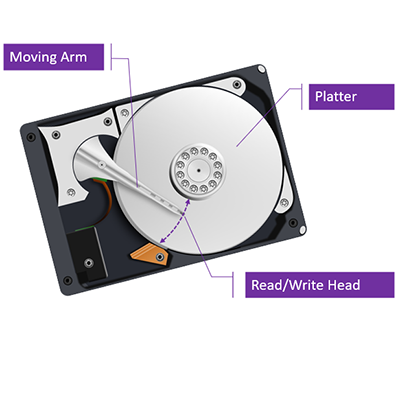
Every algorithm in this simulator is scored by total seek time — the sum of the absolute distances the head travels between consecutive requests. Lower is better.
Watch the running seek total in the simulator to feel why the order of service has such a large impact on disk performance.
From the simplest queue order to the elevator-style sweeps. Pick any of them in the simulator.
Services requests strictly in the order they arrive. Simple and fair with no starvation, but rarely the fastest.
Always jumps to the closest pending request, regardless of direction. Cuts total seek time but can starve far requests.
Moves in one direction servicing requests to the end of the disk, then reverses — like an elevator sweeping floors.
Like SCAN, but after reaching the end it jumps straight back to the start, giving more uniform waiting times.
Like SCAN, but only travels as far as the last request in each direction instead of the disk's physical edge.
Like C-SCAN, but only goes as far as the farthest request before jumping back — avoiding wasted travel to the edge.
Enter a request queue, choose an algorithm, and press play. Compare all six on the same input to find the optimal schedule.